Master’s student, LM-11
Master’s thesis on chitosan nanomaterials for wood conservation
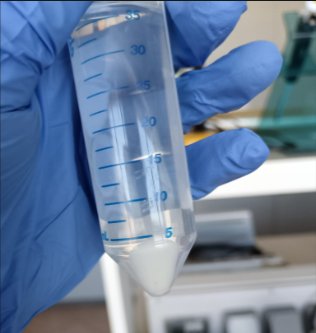
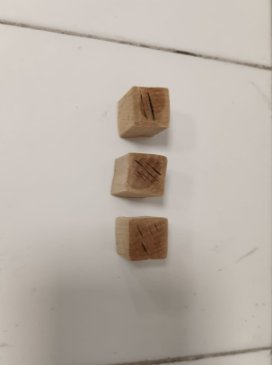
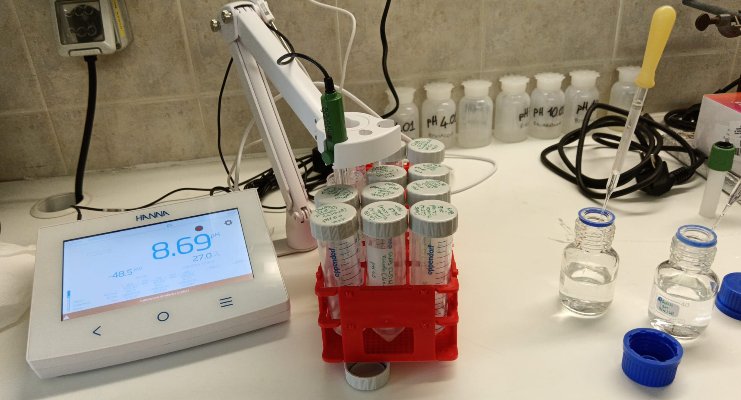
For my thesis I optimised the synthesis of chitosan nanoparticles — a natural polymer — loaded with essential oils, to obtain a reproducible material for the conservation of archaeological wood, both as a consolidant and as a biocide. These are “green” products: they are not harmful to those who handle them, and they offer an alternative to traditional consolidants, which often use toxic solvents and, over time, can damage the very material they are meant to protect. I worked mainly in the Sapienza laboratories, with some analyses carried out at the ENEA centre in Frascati.
After the synthesis, I checked that the nanoparticles had formed and bonded with the essential oil, characterising them with UV-Vis spectroscopy (to detect the bioactive compound and its interaction), the DLS technique (to measure their size with a laser) and scanning electron microscopy (SEM), which produced images of them.
What I did not expect is how demanding this work is, but also how rewarding, and how important it is to stay open to several disciplines: the programme leads to a truly multidisciplinary approach. To anyone thinking of enrolling I would say: look carefully into the activities, perhaps talking to students or representatives, don’t be put off by the science subjects and, if it feels right, go for it — the rewards can be great.