Education Area in Applied Sciences for Cultural Heritage
The Education Area
The Programme
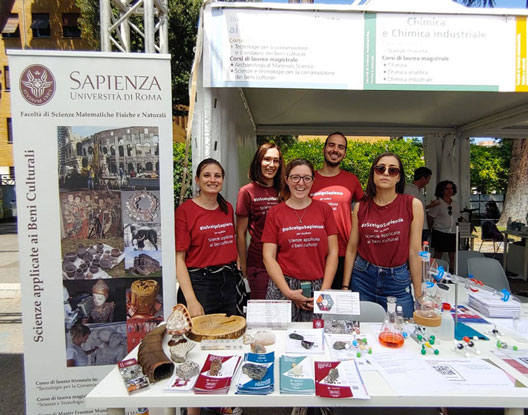
Applied Sciences for Cultural Heritage train the Conservation Scientist: an internationally recognised professional who brings chemistry, physics, biology and earth sciences into heritage conservation. At Sapienza, this pathway is structured across three degree programmes:
-
Bachelor's Degree in Technologies for the Conservation and Restoration of Cultural Heritage (L-43): provides the foundations across the various fields of the natural sciences and cultural heritage, enabling students to orient themselves within the field of conservation;
-
Master's Degree in Sciences and Technologies for the Conservation of Cultural Heritage (LM-11): completes the training as a Conservation Scientist and explores in greater depth the more specialised aspects of Applied Sciences for Cultural Heritage;
- Master Course in Science and Technology for the Conservation of Cultural Heritage (LM-11): the programme is taught in English and enables the Conservation Scientist to work in an international context from the very outset of their in-depth training across the various fields of Applied Sciences for Cultural Heritage.
How you study
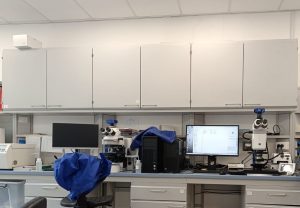
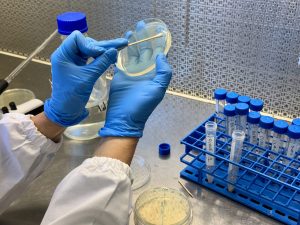
Lectures, laboratory work, internships, case studies, and visits to museums and archaeological sites. Archaeology, art and the sciences are not separate subjects: they converge within the same programme. The curriculum leaves room for individual interests without sacrificing depth.
Career prospects
The Conservation Scientist finds employment in public institutions, private companies and research bodies: not only in conservation and diagnostics, but also in materials research, environmental monitoring and protection, and design.
Admission Requirements
Bachelor's Degree in Technologies for the Conservation and Restoration of Cultural Heritage (L-43)
- Upper secondary school diploma
- TOLC-S, online knowledge assessment test
- Admission call 2026/27
Master's Degree in Sciences and Technologies for the Conservation of Cultural Heritage and Master Course in Science and Technology for the Conservation of Cultural Heritage (LM-11)
- A Bachelor's degree, or a foreign qualification recognised as equivalent by the Admissions Committee
- 84 ECTS credits in core subjects: MAT, CHIM, FIS, GEO, BIO, INF, ING-IND
- 6 ECTS credits in the following disciplinary areas: L-ANT, L-ART, M-STO, ICAR, IUS, SECS
-
English at B2 level; in the absence of certification, the level is assessed by the Committee.
International students are assessed on the basis of their curriculum and academic background. - List Item
- Admission call 2026/27
Deadlines and Procedures
How to Apply
Bachelor's Degree (L-43)
- Online entrance knowledge assessment test (TOLC-S), to be taken by 29 October 2026.
- Registration on Infostud and payment of the fee of €10.00: from 2 July 2026 to 29 October 2026.
-
Enrolment, first instalment:
from 1 September 2026 to 5 November 2026. - Enrolment procedure details
- Further information
Master's Degree / Master Course (LM-11)
- Assessment of curricular requirements and an interview, for all students except those holding a degree in L-43.
-
Interviews are held remotely. Dates for the 2026/27 academic year:
Tuesday 22 September 2026;
Friday 23 October 2026;
Tuesday 24 November 2026;
Friday 18 December 2026;
Tuesday 19 January 2027.
The invitation email, including the link and time, is sent the day before the interview. - Further information
Course Photos
Photo Gallery
Discover What We Do
Stories behind Scienze ABC
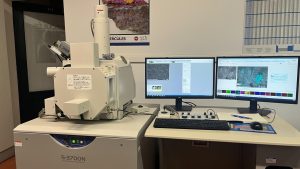
Chemists, physicists, biologists, geologists: the Conservation Scientist is a scientist who works on cultural heritage. They do not restore artworks: they study them. They analyse their materials, diagnose their deterioration, and assess their state of preservation.
Find out what our Bachelor’s and Master’s thesis students, PhD candidates and academic staff are working on!