LM-11 Master’s graduate, PhD student — SBAI Department and Department of Earth Sciences
Thesis “Multi-analytical characterisation of archaeological ceramics from the sites of Butrint and Çuka e Ajtoit (Albania): integrating Terahertz technologies into established analytical protocols”
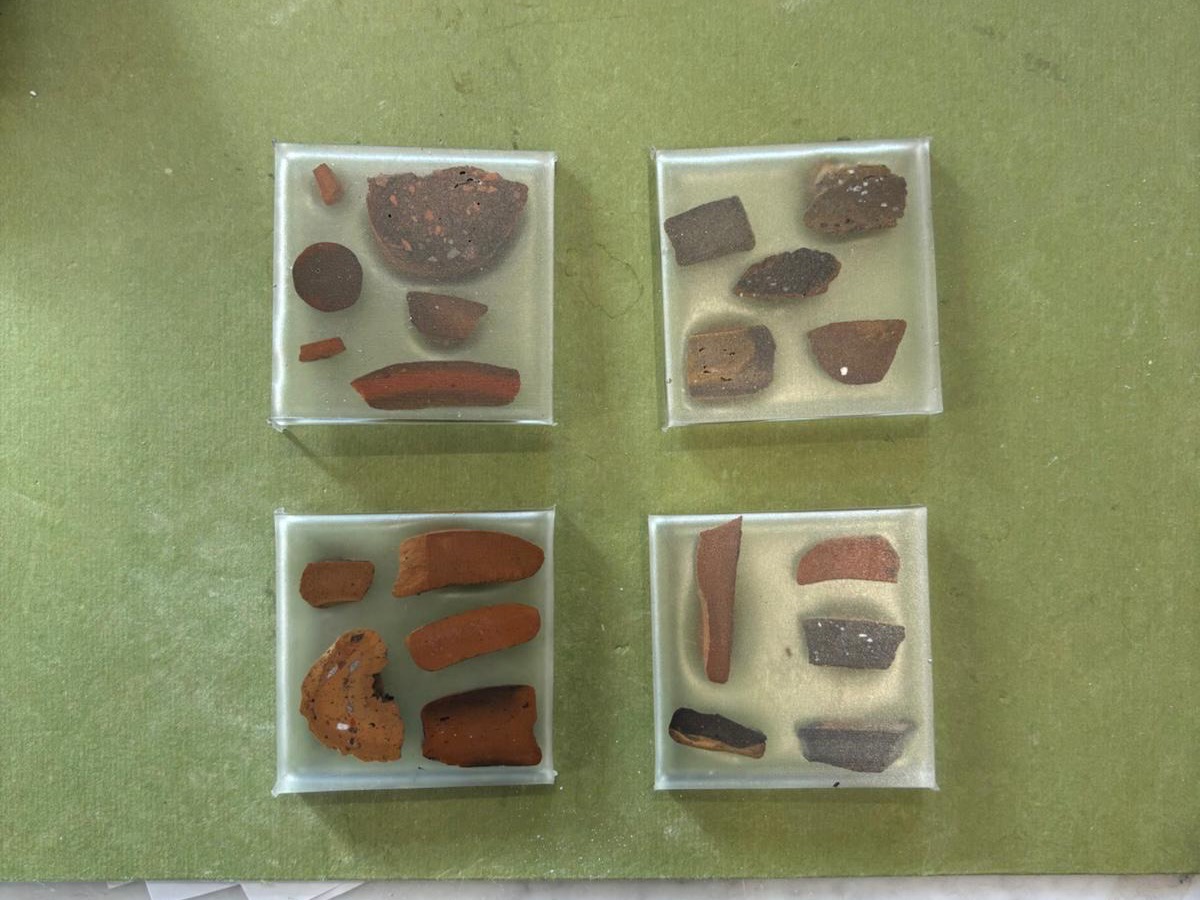
For my Master’s thesis I studied ancient ceramics from two archaeological sites in southern Albania: Butrint, a UNESCO World Heritage site since 1992, and Çuka e Ajtoit. Studying ceramics in their fundamental aspects – the minerals they contain, the types of porosity, the groundmass – makes it possible to reconstruct the production process, assess the technological level of the society that made them and, sometimes, trace the origin of the raw materials. From this information one can infer, for example, exchanges and connections between different cultures and peoples that would otherwise risk remaining invisible. To do so, I had the opportunity to use analytical techniques that are sometimes very different from one another, each suited to studying a different aspect.
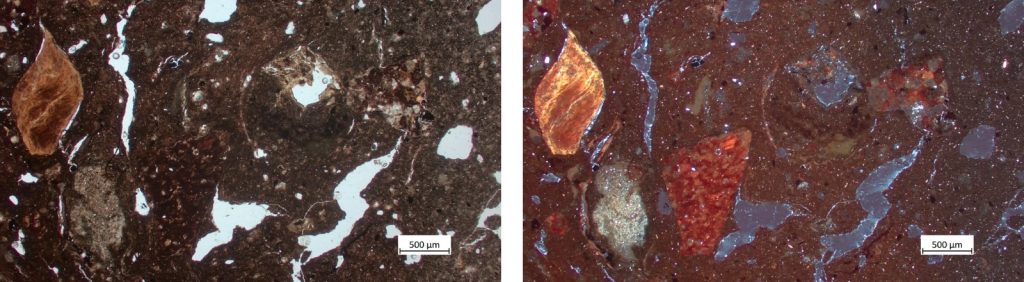
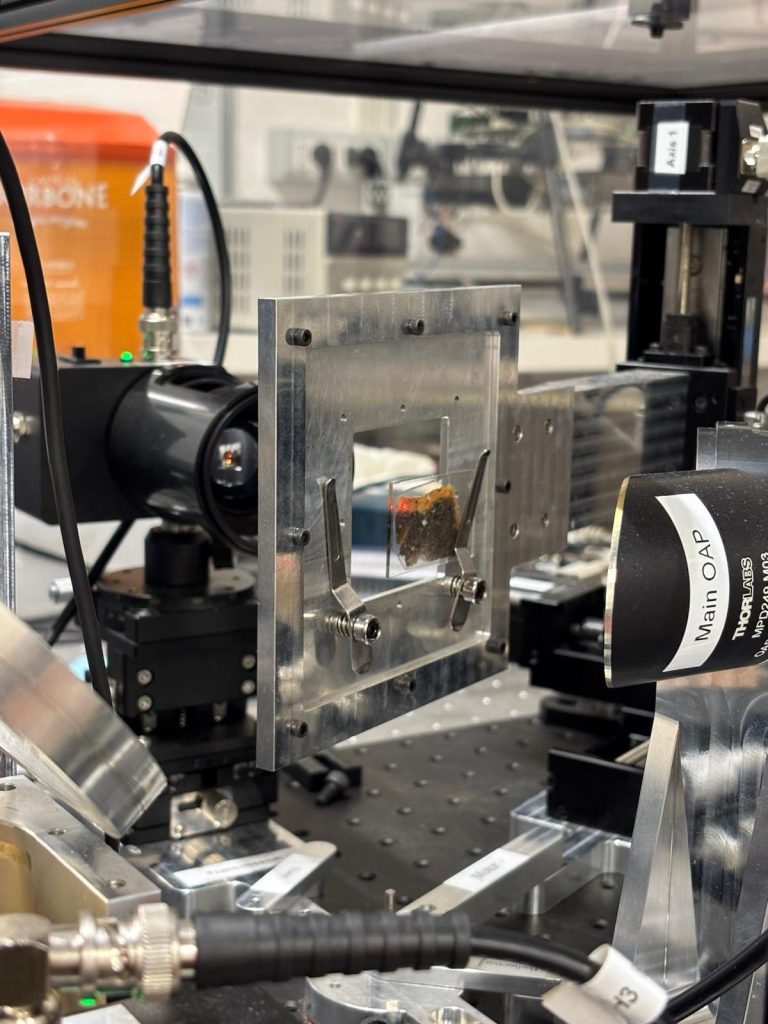
I used optical microscopy to analyse thin sections cut from the ceramics, ATR-FTIR spectroscopy to understand which types of molecules they contain, and X-ray diffraction to characterise the minerals that still retain a crystalline structure after the firing of the objects. These techniques are part of the “ideal toolkit” with which conservation scientists approach the study of ancient ceramics. In my case, other techniques were added, operating in the Terahertz frequency range, between the infrared and microwaves: although they have extremely interesting properties for the study of cultural heritage, and of ceramics in particular, they have not yet been applied extensively. A large part of my thesis focused precisely on using them in synergy with the other techniques.
The internship and the writing of the thesis changed my approach to studying: finding myself in front of real objects, to be characterised and studied for the first time, was an experience that strengthened my intention to continue in this field. I learnt to use the different instruments and to interpret their data independently, linking the information obtained from all the techniques: I was surprised to see the multidisciplinarity we had so often discussed in class become concrete, and even more so to see its results first-hand.
The most important piece of advice I can give is to look around with curiosity and to learn from the people around you, students, PhD students, professors and researchers included: it is a vast field of study, constantly evolving, where there is always something new to discover. Although it may look like a small, “niche” course, there are countless opportunities to seize, from Erasmus to internships in collaboration with research institutions and museums, all the way to external summer schools.